What Is Software Testing?
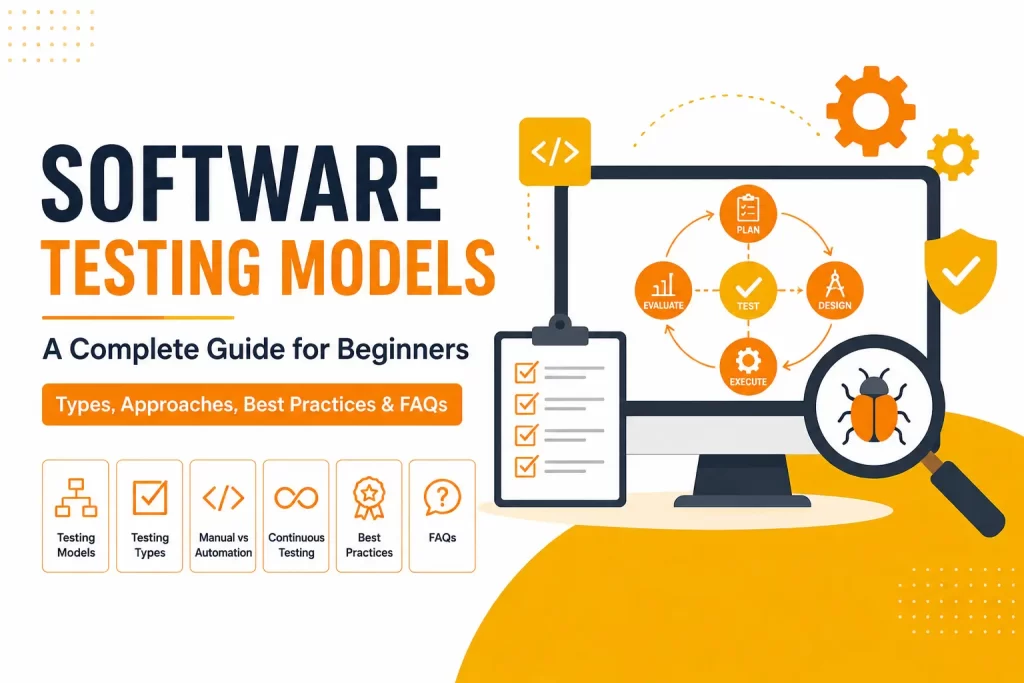
- ☑️ Software testing is the process of evaluating a software application or software product to verify that it works as expected and meets the defined software requirements. It is an essential part of the software development lifecycle because it helps identify defects before the software is released to users. In simple terms, software testing involves examining a software system to confirm that its features work as expected and that it behaves correctly in different situations.
- ☑️ As software is developed, developers write the code, while testers verify that the application behaves correctly in different scenarios. This includes validating features, identifying software failures, and ensuring that every testing phase contributes to building a stable and reliable software product. By performing different testing activities throughout the software development process, organizations can reduce risks, improve performance, and ensure software quality before deployment.
- ☑️ A complete testing process includes planning, designing test cases, setting up the test environment, executing tests, reporting defects, and verifying fixes. Depending on the project, testers may perform unit test, integration testing, system testing, API testing, and several other testing methods to evaluate different parts of the application. These testing strategies help verify that each component works individually and together as a complete software system.
- ☑️ Modern software projects also use test automation and other software tools to speed up repetitive testing tasks and improve efficiency. However, automated testing does not replace manual testing completely. Instead, both approaches work together to support development and testing, helping teams deliver working software that meets business and user expectations.
- ☑️ Understanding software testing is the first step toward learning the different software testing models used in the industry. Each model follows a specific approach to testing based on the project’s software development approach, development methodologies, and business requirements. Choosing the right model helps teams organize their testing activities, reduce defects, and focus on delivering high-quality software.
What Is a Software Testing Model?
A software testing model is a structured framework that defines how testing should be planned, executed, and managed during the software development process. It provides a systematic approach to testing by describing when different testing activities should be performed, which testing methods should be used, and how the results should be evaluated. Instead of testing randomly, a testing model helps teams follow a clear process to improve software quality.
Different projects require different software testing models based on their size, complexity, and development methodologies. For example, a project following the Waterfall approach uses a different testing workflow than an Agile project. Choosing the right model helps teams organize the testing phase, improve collaboration between development and testing, and build a reliable software product.
Why Is a Software Testing Model Important?
A well-defined software testing model helps teams perform testing in a planned and organized manner. It reduces confusion, improves communication, and ensures that testing is carried out at every important stage of the software development lifecycle. Following a structured model also helps identify defects early, reducing the cost and effort required to fix them later.
A proper testing model also helps teams:
- ☑️ Improve the overall quality of the software.
- ☑️ Detect software failures before deployment.
- ☑️ Verify that the application meets all software requirements.
- ☑️ Support effective testing strategies throughout the project.
- ☑️ Help ensure software quality before releasing the application.
- ☑️ Deliver stable and working software to end users.
Difference Between Software Testing and Software Testing Models
| Software Testing | Software Testing Model |
| It is the process of checking whether a software application works correctly. | It is a structured framework that defines how testing should be performed. |
| Focuses on identifying defects and validating software functionality. | Focuses on organizing and managing the entire testing process. |
| Includes activities such as unit testing, integration testing, system testing, and API testing. | Includes models such as Waterfall, Agile, Spiral, V-Model, and Iterative Model. |
| Ensures the software meets functional and non-functional requirements. | Helps teams follow a consistent testing approach throughout the project. |
| Performed during different stages of software development. | Selected based on the project’s software development approach and business requirements. |
Why Are Software Testing Models Important in Software Development?
As software applications become more complex, following a structured testing process becomes essential. A software testing model provides a clear framework for planning, executing, and monitoring testing activities throughout the software development process. Instead of performing tests randomly, teams can follow a systematic approach that helps identify defects early, reduce development risks, and deliver a high-quality software product. Whether the project follows traditional or modern development methodologies, selecting the right testing model improves collaboration between developers and testers while ensuring every stage of development is properly validated.
Role of Software Testing in the SDLC
- ☑️ Software testing is an integral part of the software development life cycle (SDLC). It is not limited to the final stage of a project but is performed throughout different phases to verify that the software meets business and technical requirements. During the software development lifecycle, testing helps validate new features, identify defects, and confirm that each module functions as expected before moving to the next phase.
- ☑️ By integrating testing into every stage of development, organizations can reduce the chances of software failures, improve development efficiency, and build reliable software that meets user expectations.
How Do Testing Models Improve Software Quality?
A well-defined software testing model helps maintain consistency throughout the project. It guides teams on when to perform testing activities, which testing methods to use, and how to evaluate the results. This structured approach reduces confusion and ensures that important test scenarios are not missed.
Testing models also improve software quality by:
- ☑️ Detecting defects at an early stage.
- ☑️ Verifying software requirements before deployment.
- ☑️ Supporting better collaboration between development and testing teams.
- ☑️ Improving test coverage across the application.
- ☑️ Reducing the chances of software failures after release.
- ☑️ Helping deliver reliable software with better performance and stability.
Benefits of Following a Structured Testing Approach
Using a structured approach to testing provides several advantages for both development teams and organizations.
- ☑️ Improves planning and execution of testing activities.
- ☑️ Helps identify defects before they affect end users.
- ☑️ Reduces the cost of fixing issues later in the project.
- ☑️ Supports consistent testing throughout the software development process.
- ☑️ Improves communication between developers, testers, and stakeholders.
- ☑️ Makes the testing process easier to manage and monitor.
- ☑️ Increases confidence in the final software product.
- ☑️ Helps ensure software quality before release.
- ☑️ Contributes to delivering high-quality software within the planned timeline.
Common Challenges Without a Testing Model
Projects that do not follow a structured software testing model often face several challenges during development and deployment.
- ☑️ Unorganized testing activities.
- ☑️ Missed test cases and incomplete validation.
- ☑️ Increased software failures after release.
- ☑️ Delayed defect identification.
- ☑️ Poor communication between development and testing teams.
- ☑️ Difficulty managing the testing phase.
- ☑️ Inconsistent testing strategies across different modules.
- ☑️ Higher maintenance costs after deployment.
- ☑️ Reduced software reliability and customer satisfaction.
Top Software Testing Models Every Beginner Should Know
- ☑️ Different software projects have different requirements, timelines, and development approaches. For this reason, there is no single software testing model that fits every project. Choosing the right model depends on factors such as project size, complexity, customer requirements, team structure, and the software development approach being followed.
- ☑️ The following are some of the most widely used different software testing models in the software industry. Understanding these models will help beginners learn how testing is planned and executed throughout the software development lifecycle.
Waterfall Model
The Waterfall model is a linear software development and testing approach where each phase is completed before moving to the next one. Development follows a fixed sequence, including requirement analysis, design, implementation, testing, deployment, and maintenance.
Testing begins only after the development phase is completed. This model is suitable for projects with well-defined and stable requirements where major changes are not expected during development.
Best suited for:
- ☑️ Government projects
- ☑️ Banking applications
- ☑️ Enterprise software with fixed requirements
Agile Model
The Agile Model follows an iterative and flexible approach where development and testing happen simultaneously. Instead of waiting until the end of development, testing is performed in every sprint, allowing teams to identify defects early and deliver working software faster.
Agile encourages continuous collaboration between developers, testers, and stakeholders, making it one of the most popular modern approaches to software testing.
Best suited for:
- ☑️ Web applications
- ☑️ Mobile applications
- ☑️ SaaS products
- ☑️ Startup projects
Iterative Model
The Iterative Model develops the software in small cycles called iterations. Each iteration adds new features while improving the existing functionality based on feedback received from testing and users.
Testing is performed after every iteration to verify that newly developed features work correctly without affecting existing functionality. This approach helps reduce risks and supports continuous improvement throughout the project.
Best suited for:
- ☑️ Large business applications
- ☑️ E-commerce platforms
- ☑️ Customer-driven software projects
Spiral Model
The Spiral Model combines software development with continuous risk analysis. Development progresses through multiple cycles, with each cycle focusing on planning, risk assessment, development, and testing.
This model is suitable for large and complex projects where requirements may change during development. Testing plays an important role in identifying risks before they become major issues.
Best suited for:
- ☑️ Healthcare systems
- ☑️ Banking software
- ☑️ Aerospace and defense applications
- ☑️ Large enterprise systems
V-Model
The V-Model, also known as the Verification and Validation Model, extends the Waterfall approach by linking every development phase with a corresponding testing phase. As soon as a development activity is completed, its related testing activity is planned and executed.
This model emphasizes early test planning and helps ensure software quality throughout the project.
Best suited for:
- ☑️ Medical software
- ☑️ Embedded systems
- ☑️ Government projects
- ☑️ Safety-critical applications
Incremental Model
In the Incremental Model, the software application is developed and delivered in multiple smaller releases. Each increment adds new functionality while testing ensures that both new and existing features continue to work correctly.
This approach allows users to start using the application early while development continues for future releases.
Best suited for:
- ☑️ Business applications
- ☑️ CRM and ERP systems
- ☑️ Cloud-based software products
DevOps Testing Model
The DevOps Testing Model integrates development, testing, and operations into a continuous workflow. Instead of treating testing as a separate phase, automated testing is performed throughout the development pipeline using test automation and modern software tools.
This model supports continuous integration and continuous delivery (CI/CD), enabling teams to identify issues quickly and release software more frequently without compromising quality.
Best suited for:
- ☑️ Cloud applications
- ☑️ Microservices architecture
- ☑️ Enterprise DevOps projects
- ☑️ Continuous deployment environments
Each software testing model has its own advantages and is designed for specific project requirements. Selecting the right model helps teams organize testing activities, reduce software failures, and deliver reliable software efficiently. In the next section, we’ll explore the types of software testing used in different models and understand how each testing method contributes to software quality.
Regardless of the software testing model used, every project requires different testing methods to verify that the application works correctly. Each type of testing focuses on a specific aspect of the software system, helping teams identify defects, validate functionality, and ensure software quality before the product is released. Choosing the right combination of various software testing techniques depends on the project requirements, testing phase, and development approach.
Functional Testing
Functional testing verifies whether each feature of a software application works according to the specified software requirements. It focuses on validating the application’s functionality by checking inputs, outputs, and business logic without considering the internal code structure.
Functional testing is commonly used to:
- ☑️ Verify application features.
- ☑️ Validate business requirements.
- ☑️ Ensure expected outputs are produced.
- ☑️ Confirm user workflows function correctly.
Non-Functional Testing
Non-functional testing focuses on measuring the quality attributes of a software application, such as its speed, reliability, security, scalability, and overall user experience, instead of checking specific features. It measures quality attributes such as speed, scalability, reliability, and usability to ensure the application performs efficiently under different conditions.
Non-functional testing helps evaluate:
- ☑️ Performance
- ☑️ Scalability
- ☑️ Reliability
- ☑️ Availability
- ☑️ Usability
- ☑️ Compatibility
Security Testing
Security testing identifies vulnerabilities that could expose sensitive information or allow unauthorized access to the application. It helps organizations protect user data and maintain secure software systems by validating authentication, authorization, encryption, and other security mechanisms.
Security testing focuses on:
- ☑️ User authentication
- ☑️ Data protection
- ☑️ Access control
- ☑️ Network security
- ☑️ Vulnerability identification
- ☑️ Risk assessment
Performance Testing
Performance testing measures how a software application behaves under different workloads. It helps determine whether the application can maintain speed, stability, and responsiveness when multiple users access it simultaneously.
Performance testing evaluates:
- ☑️ Response time
- ☑️ Application speed
- ☑️ System stability
- ☑️ Resource utilization
- ☑️ Scalability under heavy traffic
Regression Testing
Regression testing ensures that newly added features, bug fixes, or code changes do not affect the existing functionality of the application. It is performed repeatedly throughout the software development lifecycle, especially after updates or enhancements.
Regression testing helps to:
- ☑️ Verify existing features continue to work.
- ☑️ Identify issues introduced by recent changes.
- ☑️ Maintain software stability.
- ☑️ Support continuous software improvement.
Acceptance Testing
Acceptance testing is the final testing phase before the software is released to customers or deployed into production. It verifies that the application satisfies business objectives and user expectations.
Acceptance testing ensures:
- ☑️ Business requirements are fulfilled.
- ☑️ The application is ready for production.
- ☑️ End users can successfully perform intended tasks.
- ☑️ The delivered software product meets customer expectations.
Using these testing methods together helps development teams validate every important aspect of a software application. While each software testing model may follow a different workflow, combining functional, non-functional, security, performance, regression, and acceptance testing plays a vital role in delivering high-quality software.
Manual Testing vs Automated Software Testing
Every software project requires a suitable testing approach to verify that the application works correctly before it is released. Two of the most widely used approaches are manual testing and automated software testing. Both play an important role in the testing process, and choosing between them depends on the project requirements, testing goals, available software tools, and the stage of the software development lifecycle. In many real-world projects, organizations combine both approaches to improve efficiency and ensure software quality.
What Is Manual Testing?
Manual testing is the process of verifying a software application by executing test cases without using test automation tools. Testers interact with the application just as an end user would, checking whether each feature works according to the specified software requirements.
Manual testing is commonly used for:
- ☑️ Exploratory testing
- ☑️ Usability testing
- ☑️ User interface (UI) testing
- ☑️ Ad-hoc testing
- ☑️ Acceptance testing
- ☑️ Small and short-term projects
What Is Automated Software Testing?
Automated software testing uses specialized software tools and test automation frameworks to execute test cases automatically. Instead of repeating the same tests manually, automated scripts validate application functionality, compare actual and expected results, and generate test reports with minimal human effort.
Automated testing is commonly used for:
- ☑️ Regression testing
- ☑️ API testing
- ☑️ Performance testing
- ☑️ Load testing
- ☑️ Smoke testing
- ☑️ Large and long-term projects
Key Differences Between Manual and Automated Software Testing
| Manual Testing | Automated Software Testing |
| Test cases are executed manually by testers. | Test cases are executed automatically using automation tools. |
| Suitable for exploratory and usability testing. | Best suited for repetitive and large-scale testing. |
| Requires more human effort and time. | Executes repetitive test cases quickly while allowing testers to focus on more complex testing activities. |
| Lower initial setup cost. | Higher initial investment in automation tools and scripts. |
| Easier to perform for small projects. | More efficient for large and frequently updated applications. |
| Human observation helps identify UI and usability issues. | Provides faster execution with consistent results. |
When to Choose Manual or Automated Software Testing
Choose manual testing when:
- ☑️ The project is small or short-term.
- ☑️ User experience and usability need to be evaluated.
- ☑️ Requirements change frequently.
- ☑️ Exploratory testing is required.
- ☑️ Automation is not cost-effective.
Choose automated software testing when:
- ☑️ The application requires frequent regression testing.
- ☑️ The project follows Agile or DevOps development.
- ☑️ Test cases need to be executed repeatedly.
- ☑️ Fast feedback is required during continuous integration.
- ☑️ The project involves large-scale or enterprise applications.
Manual testing and automated software testing are not competitors; they complement each other. Combining both approaches allows teams to improve test coverage, reduce testing time, and deliver reliable software with greater confidence. In the next section, we’ll explore continuous testing in modern Agile software development and understand how organizations maintain software quality throughout the development process.
Continuous Testing in Modern Agile Software Development
Modern software projects require frequent updates, faster releases, and continuous improvements. To support these requirements, organizations have adopted continuous testing as part of Agile software development and DevOps practices. Instead of waiting until the end of the project, testing is performed throughout the software development lifecycle, allowing teams to identify defects early and maintain the quality of the application at every stage.
What Is Continuous Testing?
Continuous testing is a testing approach in which test cases are executed continuously throughout the software development process whenever new code or features are added. This helps development and testing teams receive immediate feedback, identify issues early, and verify that the application remains stable after every change.
Continuous testing supports:
- ☑️ Early defect detection.
- ☑️ Faster validation of new features.
- ☑️ Continuous quality improvement.
- ☑️ Better collaboration between development and testing teams.
- ☑️ Reliable software releases.
Continuous Testing in Agile Projects
In Agile development, software is built in small iterations called sprints. Since every sprint introduces new features or improvements, testing is performed continuously rather than waiting until the project is completed.
Continuous testing in Agile helps teams:
- ☑️ Validate new features in every sprint.
- ☑️ Detect defects before moving to the next iteration.
- ☑️ Maintain software quality throughout development.
- ☑️ Support faster software delivery.
- ☑️ Improve collaboration between developers and testers.
Continuous Testing in DevOps
In DevOps, continuous testing is integrated into the Continuous Integration and Continuous Delivery (CI/CD) pipeline. Whenever developers commit new code, automated tests are triggered to verify that the latest changes do not introduce defects into the application.
Continuous testing in DevOps helps organizations:
- ☑️ Validate code changes automatically.
- ☑️ Improve release confidence.
- ☑️ Detect issues before deployment.
- ☑️ Support frequent software releases.
- ☑️ Maintain application stability across environments.
Benefits of Continuous Testing
Organizations adopt continuous testing because it improves both software quality and development efficiency.
Some of the major benefits include:
- ☑️ Detects defects earlier in the development cycle.
- ☑️ Improves collaboration between development and testing teams.
- ☑️ Helps maintain consistent software quality.
- ☑️ Supports frequent and reliable software releases.
- ☑️ Reduces the risk of production issues.
- ☑️ Improves confidence before deployment.
- ☑️ Enables faster feedback after code changes.
- ☑️ Supports modern Agile and DevOps development practices.
Continuous testing has become an important part of modern software development because it helps teams deliver reliable applications without compromising quality. However, selecting the right testing approach is equally important, as every project has different requirements, timelines, and complexity. In the next section, we’ll explore how to choose the right testing approach for your project.
Choosing the Right Testing Approach for Your Project
Selecting the right approach to testing is an important decision in every software project. The effectiveness of a testing strategy depends on factors such as project size, business requirements, development methodology, budget, timeline, and team experience. Since every software application is different, there is no single software testing model that works for every project. Choosing the appropriate model helps teams perform testing activities efficiently and deliver high-quality software.
Factors to Consider Before Choosing a Testing Model
Before selecting a software testing model, consider the following factors:
- ☑️ Project size and complexity.
- ☑️ Business and software requirements.
- ☑️ Software development approach.
- ☑️ Development methodology (Waterfall, Agile, DevOps, etc.).
- ☑️ Project budget.
- ☑️ Delivery timeline.
- ☑️ Team size and technical expertise.
- ☑️ Availability of testing tools and test automation.
- ☑️ Risk level associated with the project.
- ☑️ Regulatory and compliance requirements.
- ☑️ Customer expectations.
- ☑️ Long-term maintenance requirements.
Selecting the Right Testing Approach Based on Project Type
Different types of software projects require different testing approaches to achieve the best results.
| Project Type | Recommended Testing Model |
| Small Business Application | Waterfall Model |
| Startup Product | Agile Model |
| E-commerce Website | Agile Model / Incremental Model |
| Banking Application | V-Model / Spiral Model |
| Healthcare Software | V-Model |
| Enterprise Application | Spiral Model / DevOps Testing Model |
| Cloud-Based Application | DevOps Testing Model |
| Mobile Application | Agile Model |
| Embedded Software | V-Model |
| Government Project | Waterfall Model |
Best Testing Models for Small and Large Projects
The choice of a testing model also depends on the scale of the project.
For Small Projects
- ☑️ Waterfall Model for projects with fixed requirements.
- ☑️ Agile Model for projects requiring frequent updates.
- ☑️ Incremental Model for applications developed in multiple releases.
For Large Projects
- ☑️ Spiral Model for complex and high-risk applications.
- ☑️ V-Model for projects requiring strict quality validation.
- ☑️ DevOps Testing Model for continuous development and deployment.
- ☑️ Agile Model for enterprise applications with regular feature enhancements.
Selecting the right testing approach helps development teams manage testing activities more effectively, reduce software failures, and ensure software quality throughout the software development lifecycle. Once the appropriate testing model is chosen, it should also be adapted to the type of application being developed. In the next section, we’ll explore software testing models for different applications, including web, mobile, embedded, and enterprise software.
Software Testing Best Practices
Different software applications have different business requirements, users, and technical challenges. As a result, the same software testing model may not be suitable for every project. Selecting the right model helps teams plan testing activities effectively, identify defects early, and ensure that the application performs as expected. The following are some commonly used testing models for different types of software applications.
Testing Models for Web Applications
Web applications are updated frequently to introduce new features and improve user experience. They require continuous validation across different browsers, devices, and operating systems.
Recommended testing models:
- ☑️ Agile Model
- ☑️ Incremental Model
- ☑️ DevOps Testing Model
Common testing activities:
- ☑️ Functional testing
- ☑️ API testing
- ☑️ Regression testing
- ☑️ Performance testing
- ☑️ Security testing
- ☑️ Cross-browser testing
Testing Models for Mobile Applications
Mobile applications must work smoothly across different screen sizes, operating systems, and device configurations. Testing also focuses on performance, usability, battery usage, and network conditions.
Recommended testing models:
- ☑️ Agile Model
- ☑️ Incremental Model
Common testing activities:
- ☑️ Functional testing
- ☑️ Compatibility testing
- ☑️ Performance testing
- ☑️ Security testing
- ☑️ Usability testing
- ☑️ Regression testing
Testing Models for Embedded Software
Embedded software is used in devices such as automobiles, medical equipment, industrial machines, and consumer electronics. Since these systems often perform critical operations, they require a structured testing process with thorough validation.
Recommended testing models:
- ☑️ V-Model
- ☑️ Waterfall Model
Common testing activities:
- ☑️ Unit testing
- ☑️ Integration testing
- ☑️ System testing
- ☑️ Performance testing
- ☑️ Security testing
- ☑️ Hardware integration testing
Testing Models for Enterprise Applications
Enterprise applications support large organizations by managing business operations such as finance, human resources, customer management, and supply chain processes. These applications usually involve multiple modules and a large number of users, making comprehensive testing essential.
Recommended testing models:
- ☑️ Spiral Model
- ☑️ DevOps Testing Model
- ☑️ Agile Model
Common testing activities:
- ☑️ Functional testing
- ☑️ Integration testing
- ☑️ System testing
- ☑️ API testing
- ☑️ Performance testing
- ☑️ Security testing
- ☑️ Regression testing
Selecting the appropriate software testing model based on the application type helps improve software quality, reduce project risks, and support efficient testing throughout the software development lifecycle. Along with choosing the right model, following proven software testing best practices further improves the effectiveness of the testing process and helps teams deliver reliable software.
Final Thoughts
Choosing the right software testing model is an important step in building reliable, secure, and high-quality software applications. Whether you are a beginner or an aspiring QA professional, understanding different testing models, testing methods, and industry best practices will help you perform software testing more effectively and prepare for real-world projects. As the software industry continues to evolve, staying updated with modern testing approaches and continuously improving your technical skills will give you a competitive advantage.
If you’re looking to build a successful career in software testing, joining the Best Software Testing Training in Chennai can help you gain practical knowledge, work on real-time projects, and prepare for interviews with confidence. At Payilagam, recognized as the Best Software Training Institute in Chennai, you will learn from experienced industry professionals through 100% practical, project-based training with placement assistance to help you start your career in the IT industry.
Frequently Asked Questions About Software Testing Models
What Is a Software Testing Model?
A software testing model is a structured framework that defines how testing activities are planned, executed, and managed during the software development lifecycle. It helps teams follow a systematic testing process, identify defects early, and ensure software quality before the application is released.
Which Software Testing Model Is Best for Beginners?
There is no single software testing model that is suitable for every project. However, beginners usually start by learning the Waterfall Model, Agile Model, and V-Model because these models explain the basic concepts of software development and testing in a simple and practical way.
What Is the Difference Between the Waterfall Model and Agile Model?
The Waterfall Model follows a sequential approach where each development phase is completed before moving to the next phase. In contrast, the Agile Model follows an iterative approach where development and testing are performed continuously in short development cycles called sprints. Agile offers greater flexibility, while Waterfall is better suited for projects with fixed requirements.
What Is the Difference Between Manual Testing and Automated Software Testing?
Manual testing is performed by testers without using automation tools, making it suitable for exploratory and usability testing. Automated software testing uses automation tools to execute predefined test cases, making it ideal for repetitive testing such as regression testing, API testing, and continuous integration.
Why Is Continuous Testing Important?
Continuous testing helps development teams identify defects early, validate new features quickly, and maintain software quality throughout the software development lifecycle. It also supports Agile and DevOps practices by providing faster feedback after every code change.
What Are the Different Types of Software Testing?
Some of the most commonly used types of software testing include Functional Testing, Non-Functional Testing, Security Testing, Performance Testing, Regression Testing, Acceptance Testing, Unit Testing, Integration Testing, and System Testing. Each testing type focuses on a specific aspect of the software to ensure that the final product is reliable, secure, and meets user requirements.